
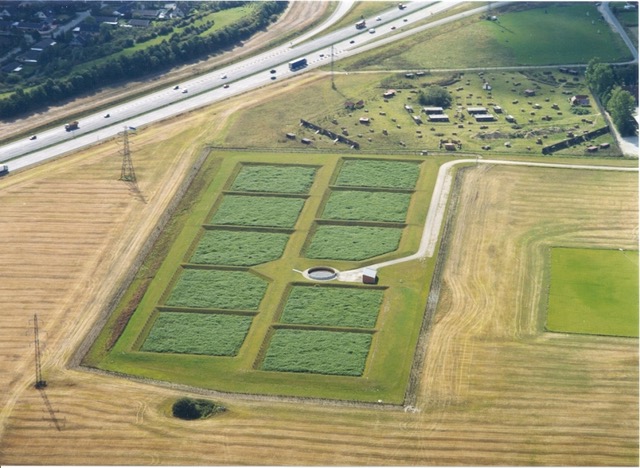
Choosing the right wastewater treatment solution is a critical decision for municipalities and industries. It affects regulatory compliance, environmental performance, and long-term operational costs. Wetland systems and specifically Reed bed systems, a type of engineered wetland, are gaining traction as an alternative to traditional, infrastructure-heavy treatment plants. But how do they truly compare, and which option delivers better results for your community or industrial setup?
Understanding the Two Systems
Reed Bed Systems (Engineered Wetlands)
The reed bed systems apply both natural processes and engineering design. Waste goes through a bed of soil and gravel contained within a lined cell and planted with reeds, where the microbial activity and filtering will be able to trap and clean up the waste. These passive systems rely on gravity or a small amount of pumping and use no external energy or chemicals.
They are instrumental within decentralized environments and propose standardized treatment with little supervision. Incorporating natural biological processes, they are able to treat the different kinds of wastewater as follows: domestic municipal sewage, landfill leachate, de-icing agents, hydrocarbons, and other commercial carbon-based wastewaters.
Conventional Wastewater Treatment
There are traditional systems of sewage /industrial effluent treatment making use of mechanical aeration, sedimentation tanks, and chemical addition. Such processes require continuous power, a qualified workforce, and regular chemical injections. They have higher capital and operating costs, although they perform well, they perform inside a limited volume window, and need bypasses or reduce the treatment when the wastewater volume surges higher than their design threshold.
Traditional plants are designed with control, scalability, and efficiency in complicated treatment situations. They are best suited in case of scarcity of land and a very high-volume output, or in cases where high volume and fast throughput are desired.
Key Comparison Areas
1. Installation and Capital Costs
The traditional systems commonly involve massive investments in concrete tanks, pumps, aerators, and controls. These are capital-intensive infrastructures that come with maintenance costs. Reed bed systems, on the other hand, require larger land areas, but they are easier to build, less costly, and very low operational costs. This is because of their earthwork-oriented design structure and little use of machinery; thus, they are most economical in rural or semi-urban areas.
Reed beds are a more viable investment in communities that have space and little budget at their disposal. They can be implemented in phases, and this reduces the up-front financial outlay due to their scalability.
2. Energy and Chemical Use
The reed bed systems run on zero or minimal energy. They are also do not use UV to disinfect or use chemicals, hence reducing their operational costs. This is of big advantage in regions where the cost of energy is increasing.
Conventional systems consume a lot of energy in such operations as aeration and sludge digestion, and often have frequent application of chemicals such as chlorine or alum in the process of disinfection and coagulation. These accumulate enormous reoccurring costs in the long run.
3. Maintenance Requirements
A significant benefit of reed bed systems is low maintenance wastewater treatment. There are no mechanical components, so no mechanical interchangeable part needed, and no mechanical breakdowns. Regular maintenance and simple inspections make the wetland systems function and provide treatment for tens of years.
Traditional systems need to be supervised on a daily basis, mechanically serviced, and require highly trained technicians to certify that all machines are in operation. Equipment malfunction or any unscheduled downtime may lead to non-compliance or emergency costs.
4. Environmental Impact
The positive impact that reed beds have on the environment is their promotion of biodiversity and a decrease in the level of carbon emissions. They also absorb greenhouse gases and provide an integration of natural landscape, and facilitate ecological regeneration.
Traditional systems have a greater carbon imprint, and they produce chemical sludge, which has to be either treated or disposed of safely. Also, they tend to cause noise and smell pollution in the surrounding area.
5. Longevity and Reliability
Well-constructed reed bed systems are now currently over 60 years old in Germany and we expect these system will last 75 to 100 years. They also do their job with very little oversight or interaction, they are self-regulating ecosystems. They are truly novel infrastructure that are appreciating assets for long-term investment.
The old mechanical plants might be vigorous, but they usually are more and more experience to maintain with replacement parts needed for blowers, motors, pumps, and screens. Such systems need upgrading and replacement after only a few years to keep them in optimum performance and to provide treatment that is in compliance.
This makes wetland systems a much more sustainable choice.
6. Treatment Efficiency
Reed bed systems are applicable on the commercial scale and can be utilised in commercial wastewater treatment in commercial industries when they are configured to the appropriate load and weather. They treat BOD (biochemical oxygen demand), TSS (total suspended solids), Nitrogen and Ammonia and pathogens ( E.coli and Total and Faecal Coliforms) effectively and surpass or satisfy the all the regulatory standards.
Conclusion
Both treatment systems have their merits. Reed beds excel in sustainability, simplicity, and long-term affordability, while conventional systems suit high-load, complex effluents requiring advanced management, and smaller footprints.
If your priority is eco-friendly design, reduced operational overhead, and long-lasting performance, reed beds may be the ideal choice. If you require centralized control, intensive treatment, and compact design, conventional systems will serve you better.
Discover zero-energy wastewater solutions with Wetland Treatment Solutions, at https://wetlandtreatment.ca contact us today!
